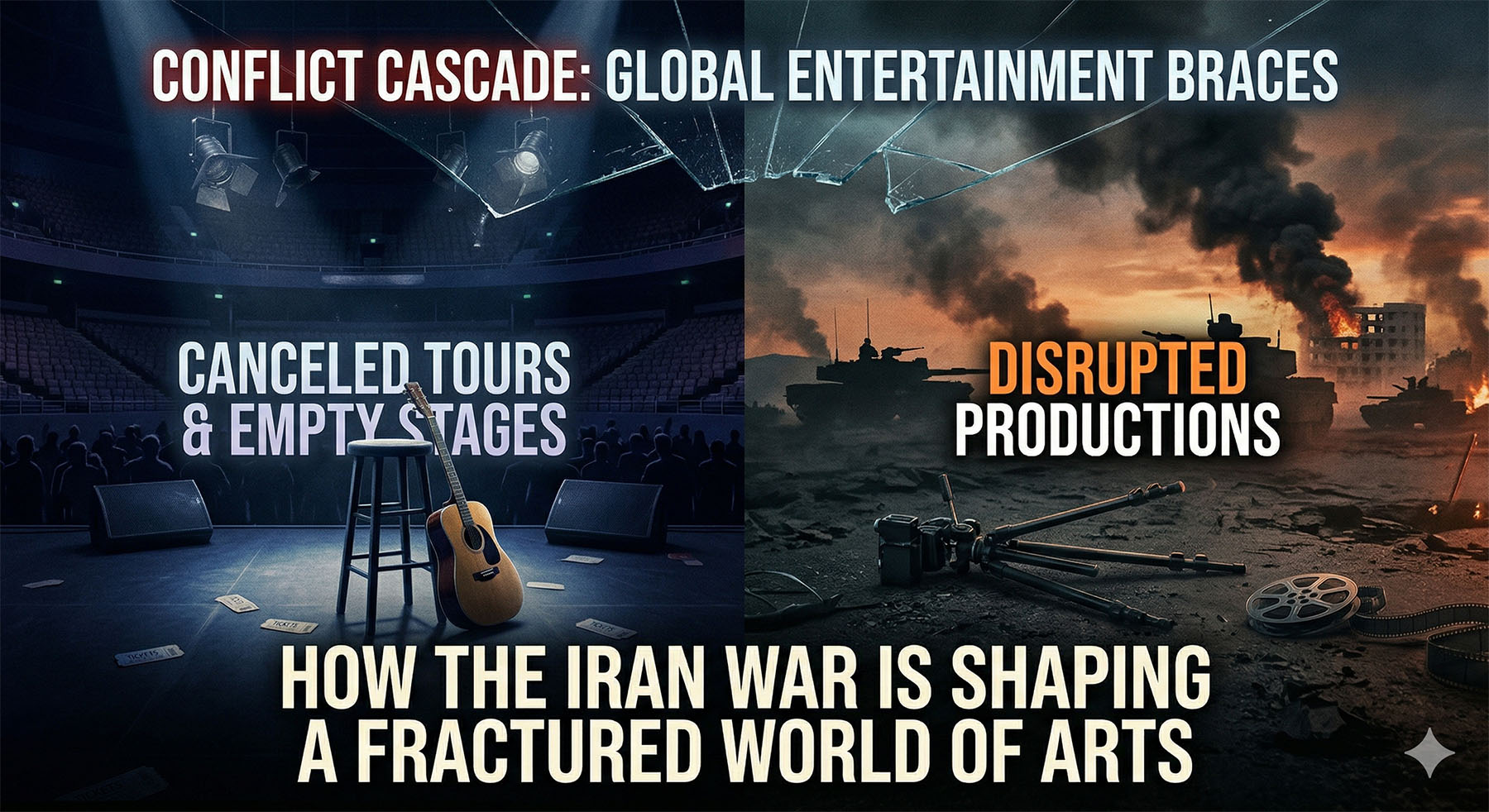
While the human cost remains paramount, the economic and operational toll on the world of arts and entertainment is becoming starkly visible. What was once a seamless global circuit for talent, production, and distribution is now a fractured landscape defined by safety concerns, soaring costs, and logistical nightmares.
The "Limbo" Effect on Film Markets and Production
One of the most immediate impacts of the conflict has been observed in the business side of filmmaking. Key industry gatherings have seen drastic changes. At the recent Filmart in Hong Kong, attendance from the Middle East film industry was severely restricted. Many executives were forced to switch to online-only participation, citing cancelled flights and the general instability of the region.
Uri Aviv, director of Israel's Utopia Festival, described being stuck in Berlin since February, in "somewhat of a limbo." While business discussions continue online, executives admit that missing spontaneous, in-person meetings at major markets harms future financing and distribution deals.
For film productions, the Middle East, particularly the Gulf region, has served as a popular location for desert landscapes and high-profile shoots. The conflict has rendered these regions inaccessible for many international crews, forcing studios to seek alternative, and often costlier, locations.
Major Tours Cancelled, Festivals Shift to Asia
The live entertainment sector—already highly sensitive to logistics—is facing its biggest challenge since the pandemic. Geopolitical tensions, coupled with travel disruptions, are reshaping the global live events landscape.
Several high-profile international tours have already been impacted. Pop artist Kesha was forced to postpone the start of her European tour due to travel difficulties stemming from the region, while Belgian DJ Charlotte de Witte cancelled her planned concerts in Australia. Promoters are finding that international travel has become infinitely more complicated due to airspace restrictions, rising insurance costs, and safety concerns.
In response, a broader industry shift is underway. Festival organizers are pivoting away from long-haul touring circuits that cross unstable zones and are prioritizing regional ecosystems. There is a marked move towards Asia, particularly Southeast Asia, where demand for live music is growing, and infrastructure is rapidly evolving. Countries like Thailand and Singapore are emerging as new central nodes in the future of the global live entertainment business.
Rising Costs and Economic Fallout
Perhaps the most insidious effect on the entertainment world is economic. The global economy is bracing for a downturn, largely driven by rising energy prices. Brent crude prices jumped nearly 40% immediately following the start of the conflict, due to the closure of the critical Strait of Hormuz—a vital vein for global energy and merchandise.
For the entertainment industry, this translates to:
Higher Production Costs: Everything from transporting equipment to powering sets is becoming more expensive.
Reduced Consumer Spending: As inflation rises due to energy shocks, consumers have less discretionary income to spend on movie tickets, concerts, and streaming services.
Increased Insurance: Maritime and aviation insurance premiums have seen a steep rise, affecting the movement of both talent and production gear.
A Platform for Protest and Unity
Amidst the disruption, the industry has also become a powerful platform for protest and humanitarian expression. At the recent Academy Awards in Los Angeles, numerous stars used the red carpet and the stage to speak out against the war, directing the world’s attention to the human cost of conflict.
Furthermore, more than 800 film professionals from around the world signed a joint statement condemning the violent repression of demonstrations within Iran, showing a rare moment of global artistic unity.
A Fractured Future
As the conflict continues, the global entertainment industry must adapt to a new operational environment where uncertainty is the only constant. Promoters and agencies are coordinating to adjust schedules, always prioritizing safety, but the days of seamless, carefree global entertainment appear to be on an indefinite hiatus. The industry is not just witnessing a war; it is being reshaped by it.